

Collage of portraits of patients from several European countries holding signs about the complications of their implants.Second collage of portraits of European patients holding signs about chronic pain and polypropylene.
The faces of the coalition: women from seven European countries describing the consequences of their implants.

European coalition of patients · 2026

A European problem demands a European response.

Thousands of women across Europe live with serious complications from gynaecological, urological and pelvic floor implants. We ask that their voices be heard, that every implant be identifiable and that European rules be genuinely enforced.

7

European countries engaged

8

demands put forward

12

documented complications

2026

ICS congress, Maastricht

01 — The problem

A problem that does not stop at national borders

In France, women carrying sub-urethral slings, mesh implants for prolapse and other gynaecological medical devices report sometimes severe complications and particularly difficult care pathways.

But these testimonies are not specific to France. We are in contact with women and organisations in Belgium, the Netherlands, Spain, Portugal, Ireland and the United Kingdom.

The same questions come back, across different health systems.

  • 01Pre-operative information considered insufficient.
  • 02Missing or inadequate traceability of devices.
  • 03Difficulty identifying precisely which device was implanted.
  • 04Inability to find the reference, manufacturer or lot number.
  • 05Persistent or chronic pain.
  • 06Urinary, sexual or digestive complications.
  • 07Long-lasting functional difficulties.
  • 08Medical wandering and no coordinated care pathway.
  • 09Difficulty finding specialised professionals.
  • 10Complex, sometimes inaccessible explantation.
  • 11Device vigilance incidents never reported by surgeons.
  • 12Minimisation of serious adverse effects in patient information leaflets.

We ask simply that these situations be examined medically, scientifically and regulatorily, without patients’ voices being set aside.

Where we start

“What we live through goes far beyond our personal stories and French borders. It is the whole of Europe that is concerned.”

We are not asking for implants to be condemned as a matter of principle. We ask for an independent, transparent and evidence-based assessment that confronts patients’ experience with medical and regulatory data.

02 — The EU framework

The European framework already exists

The European Union already has a common regulatory framework for medical devices, in particular Regulation (EU) 2017/745.

Article 18 provides that information identifying an implanted device must be supplied and that patients must be able to access relevant information about their implant. This regulation is a major step forward.

But one question remains.

How can we verify that these rights are genuinely applied in practice across all Member States?

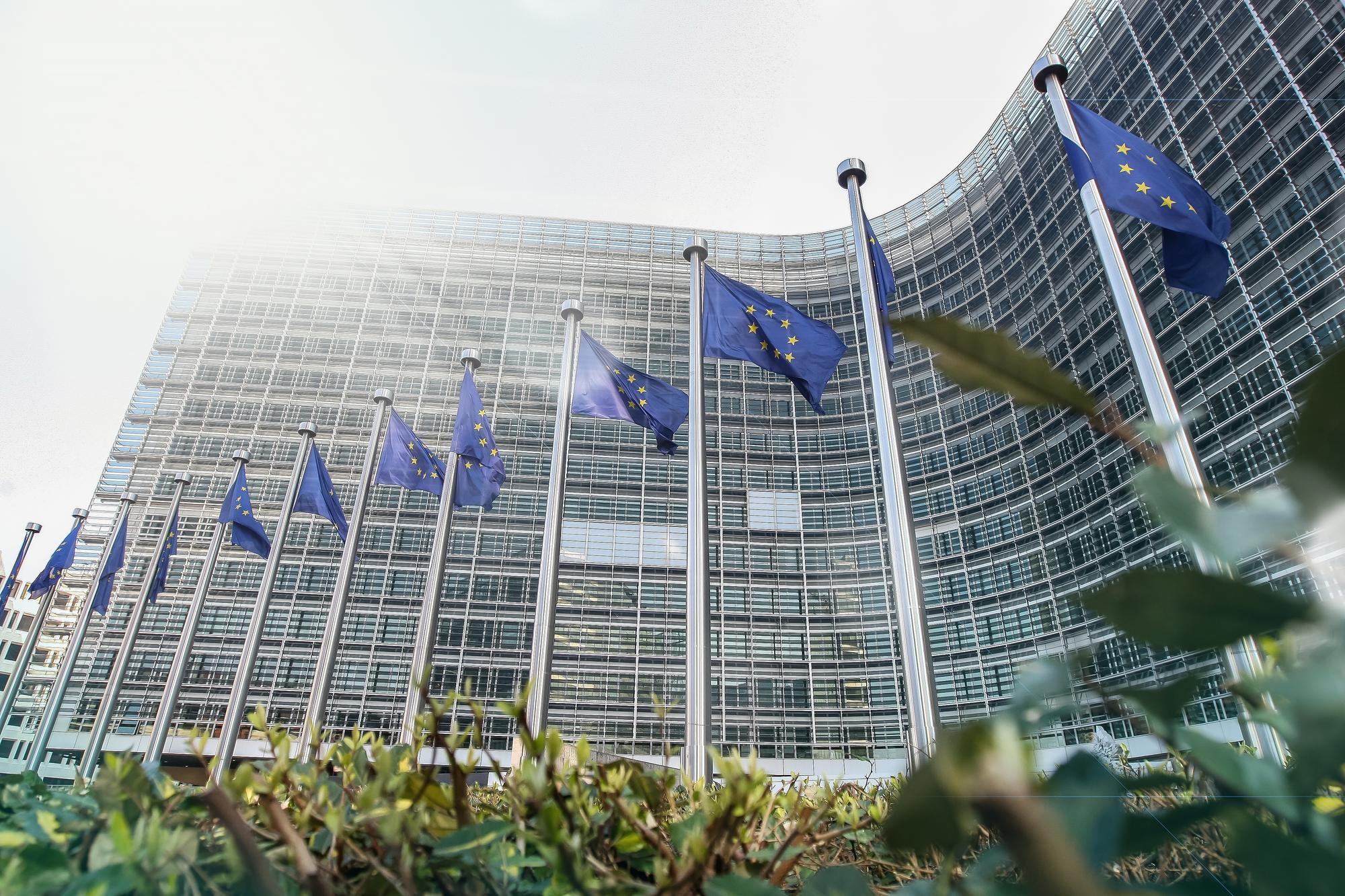
Glass facade and European flags in front of the European Parliament in Brussels.
We have requested a meeting at the European Parliament in Brussels to formally submit a documented dossier on the serious complications associated with these medical devices.

03 — Our demands

Eight questions Europe can carry

We ask that existing rules be applied, and that gaps be identified and then corrected.

  1. 01

    European traceability

    Ensure that every patient can precisely identify the implanted device, its manufacturer, reference and lot number.

  2. 02

    Older implants

    Enable people implanted years ago to retrieve information about their device, even where registries are incomplete.

  3. 03

    Device vigilance

    Collect, harmonise and analyse reports from all Member States, distinguishing those submitted by patients themselves.

  4. 04

    Long-term complications

    Assess whether sufficiently precise European data exist on complications appearing years after implantation.

  5. 05

    Specialised care pathways

    Check whether each Member State has structures able to manage complex complications linked to these devices.

  6. 06

    Explantation

    Identify the training and expertise available in Europe for surgeons who remove these implants.

  7. 07

    Patient information

    Verify whether European obligations on information and informed consent are genuinely applied before and after implantation.

  8. 08

    Withdrawn or modified devices

    Establish how already-implanted patients are informed when a device is modified, withdrawn from the market or subject to a safety alert.

04 — Testimonies

Behind the devices, lives

We are not talking about abstract data. We are talking about women living today with the consequences they report after implantation, and who simply ask that their voices be heard.

Bound dossier of documents on a light desk with glasses and a pen.

The dossier submitted to the institutions brings together testimonies, medical and scientific evidence, regulatory documents and identification of the implants.

Élodie · Belgium · 2023

“She was euthanised in Belgium after the implantation of a medical device. She could no longer bear the serious consequences imposed on her body, for which she had never given informed consent.”

Like millions of women worldwide and thousands in Europe, Élodie never received an answer proportionate to what she was living through.

One journey among others · France

On 8 July 2021, a patient underwent surgery for pelvic organ prolapse. During the operation, several medical devices were implanted: double promontofixation and a sub-urethral sling for incontinence.

Following these two procedures performed on the same day, she developed severe, disabling pain and numerous functional difficulties.

“Today I am in a wheelchair, on disability and dependent, when I had a wonderful job for 28 years in the automotive industry, with significant responsibilities. I lost everything.”

Some information about her implants could only be obtained through proceedings initiated with her lawyer. Hence the question: how can a patient ensure her own safety when she does not have precise information about the device inside her body?

Testimonies collected by the coalition and published with the consent of the people concerned or their families.

05 — Campaign

Our awareness visuals

Posters and creations carried by patients and member associations of the coalition. They circulate freely, online and on the ground, to name what the women concerned live through and to repeat what they are asking for.

Visuals shared with the consent of their authors.

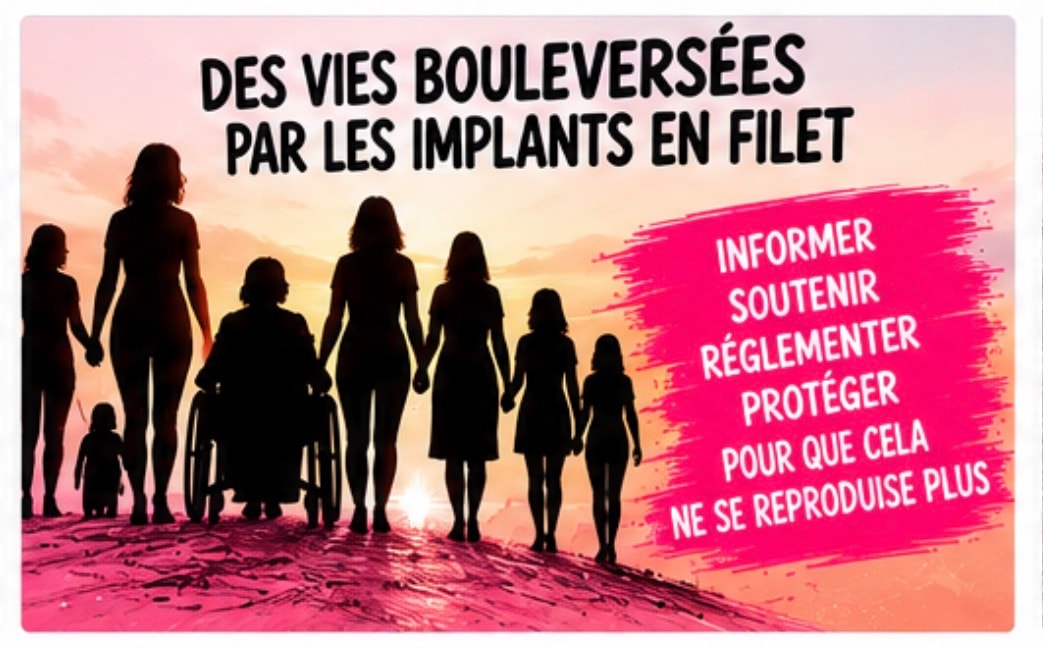
Poster showing the silhouettes of several women, one of them in a wheelchair, under the headline “Lives turned upside down by mesh implants”.
Lives turned upside down by mesh implants: inform, support, regulate, protect.
Collage with a patient holding a sign reading “We are patients, not robots, not lab mice!”, a doctor, the Hippocratic oath and the medical code of ethics.
The Hippocratic oath and the medical code of ethics must finally be respected.
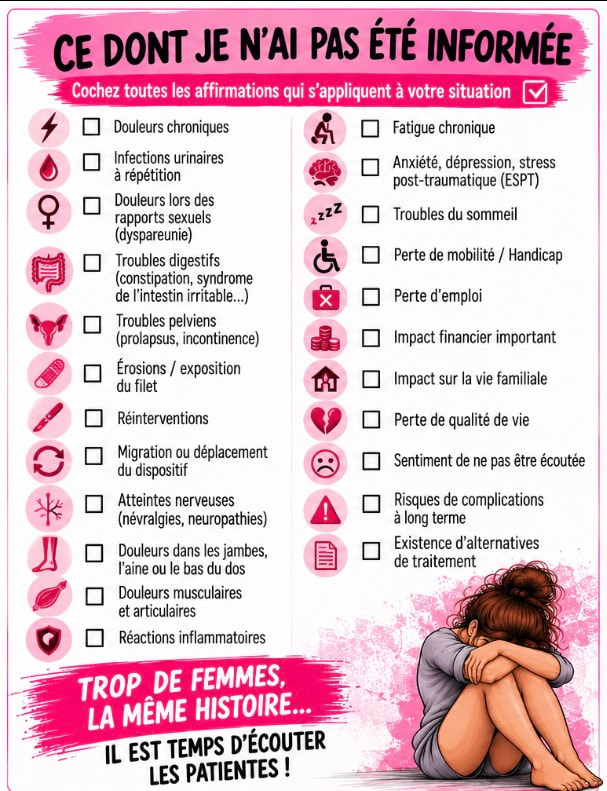
Poster with a long checklist of symptoms and consequences that patients were not informed about.
What I was not informed about: the consequences kept silent before implantation.
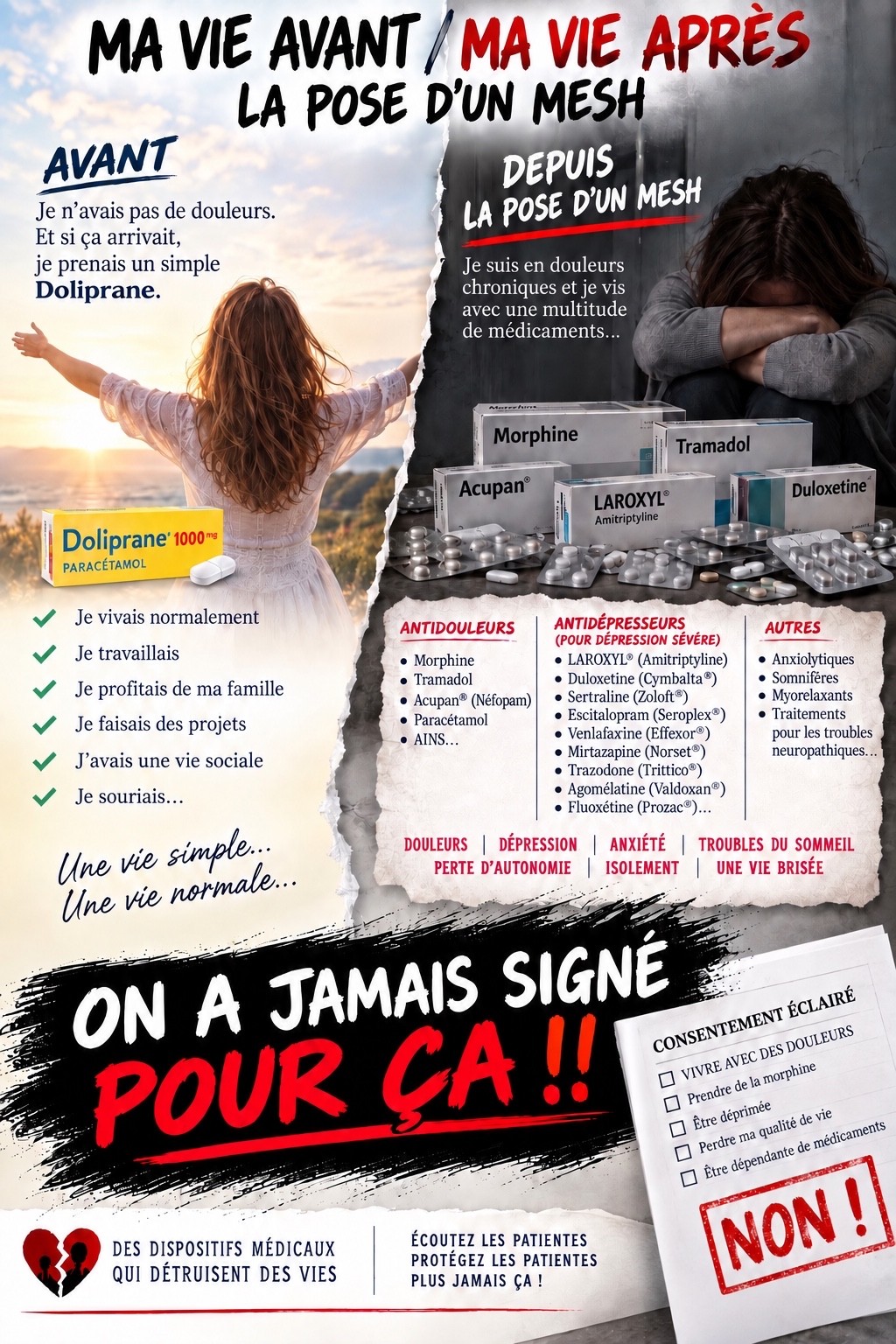
Two-part poster comparing life before a mesh implant, with paracetamol, and life after, with morphine, tramadol and antidepressants.
My life before, my life after a mesh implant: “We never signed up for this!”.
Sculpture of a woman curled up in metal mesh on a dark red stage, with a text about polypropylene mesh.
A cage without bars: the suffering no one sees.
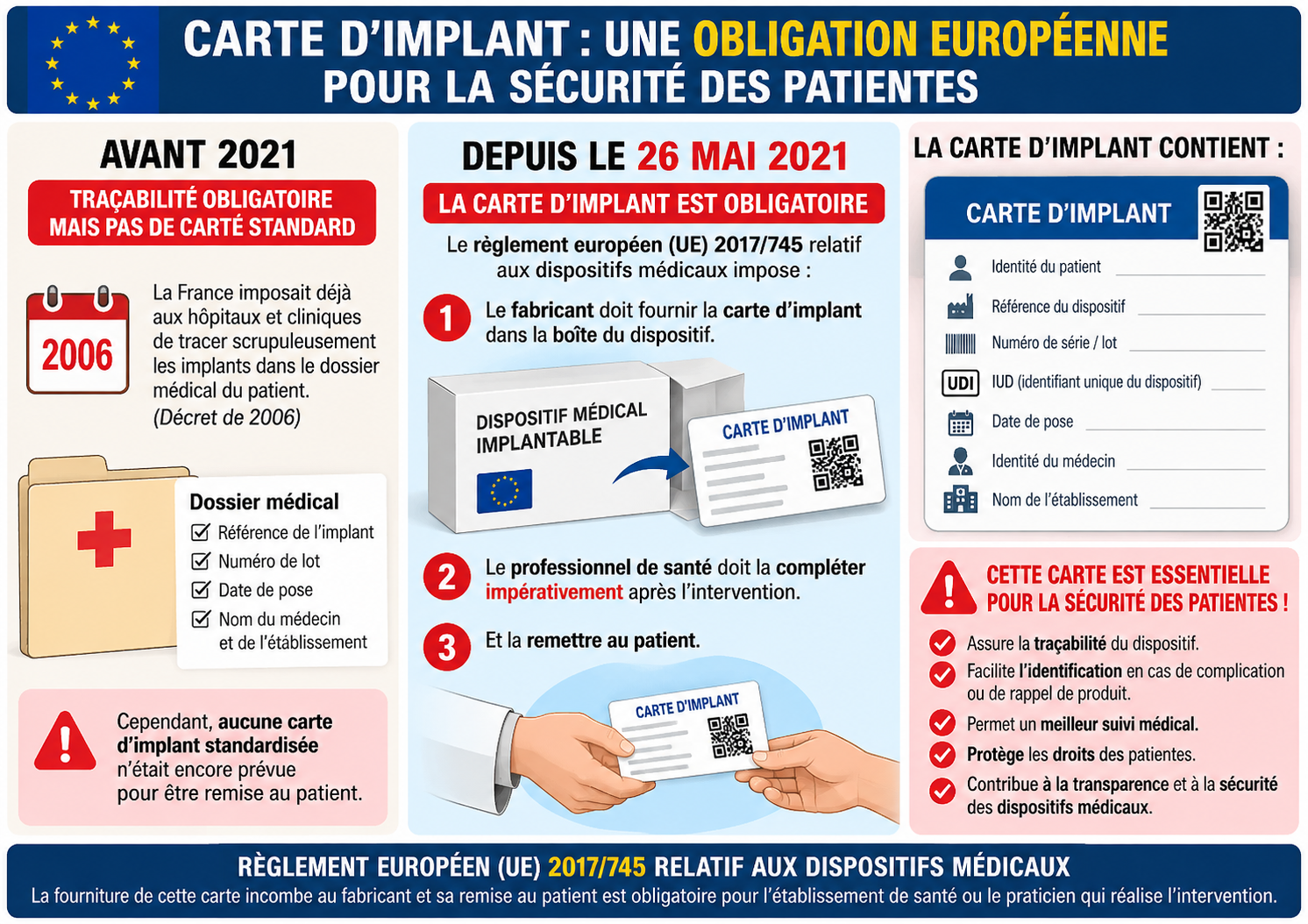
Infographic explaining the implant card that has been mandatory since 26 May 2021 and what it must contain: patient identity, device reference, lot number, UDI, implantation date, doctor and hospital.
Implant card: a European obligation for patient safety.
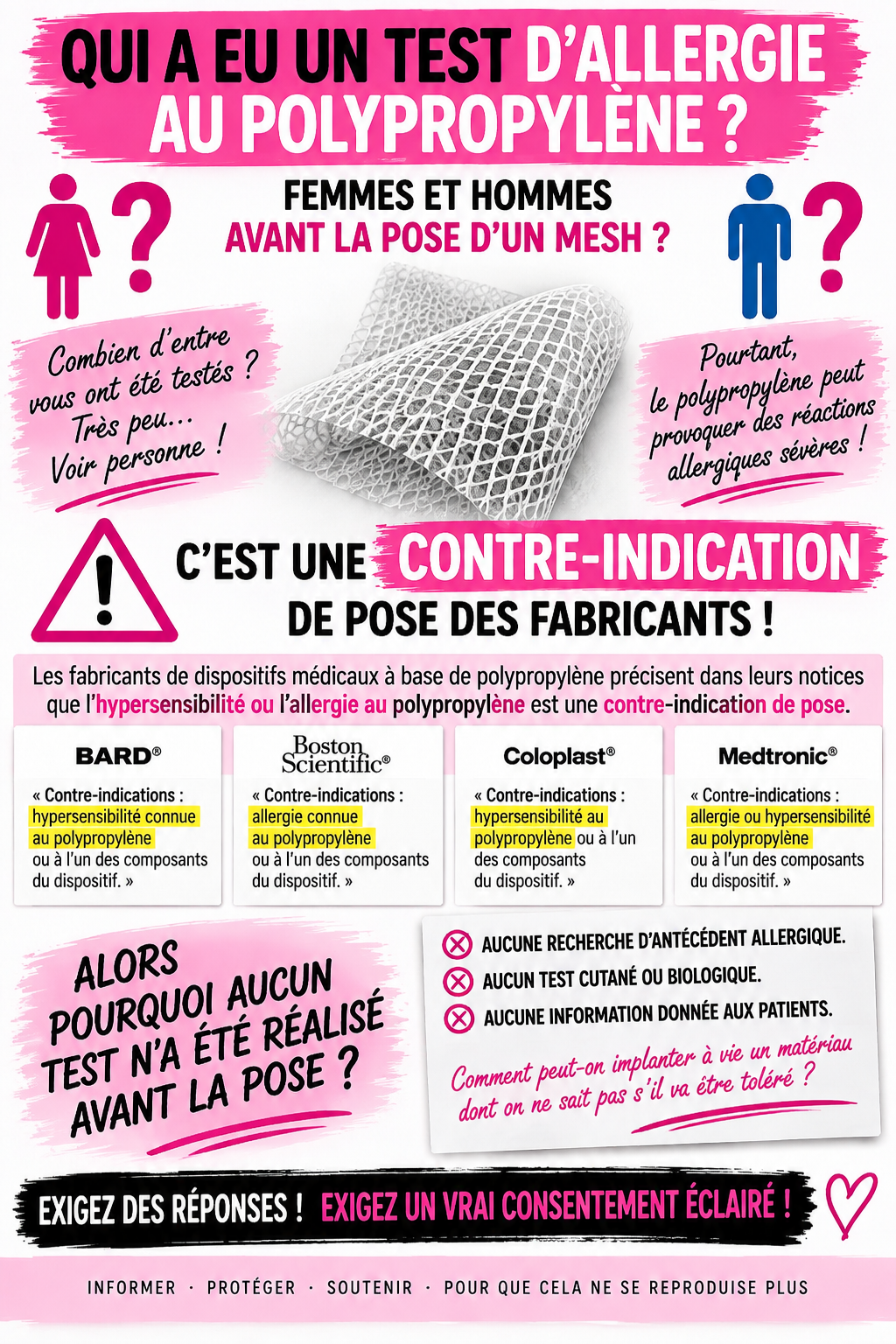
Poster asking who was tested for polypropylene allergy before a mesh implant, with the contraindications listed by four manufacturers.
Who was tested for polypropylene allergy before a mesh implant?
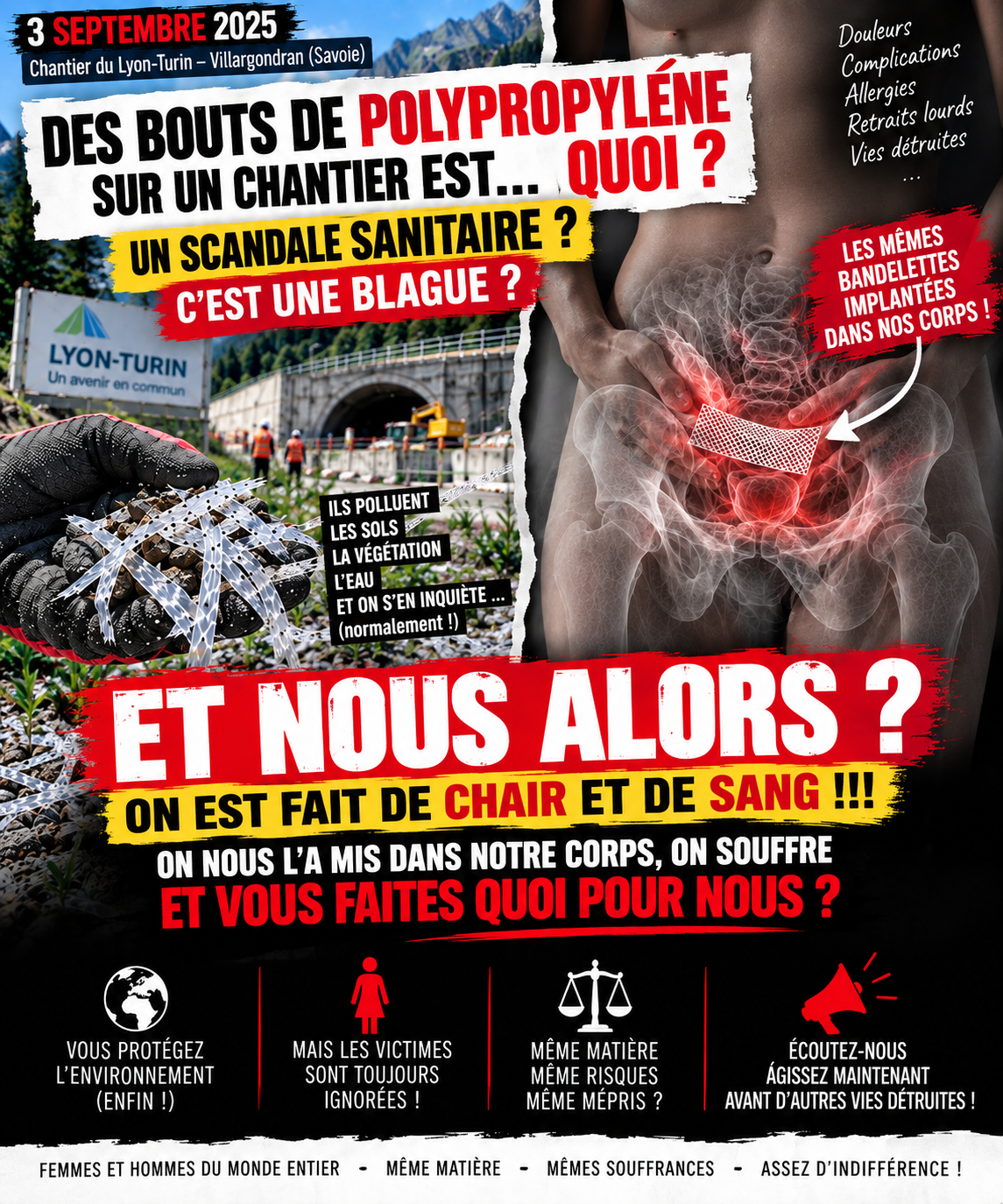
Poster showing pieces of polypropylene collected on a construction site and a female pelvis with a mesh implant.
Pieces of polypropylene on a construction site: what about us?
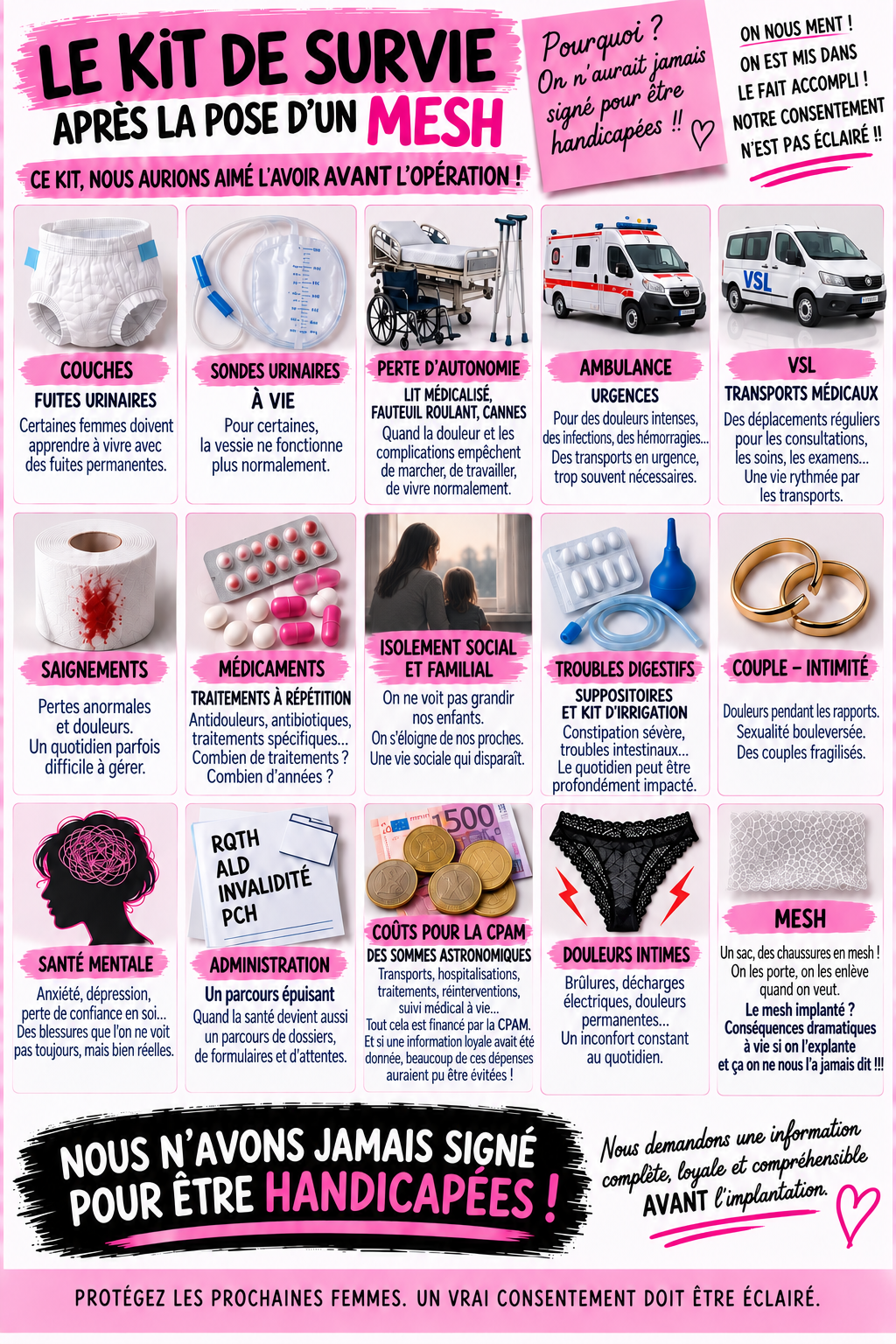
Poster “The survival kit after a mesh implant”: pads, urinary catheters, loss of independence, ambulance, bleeding, medication, isolation, digestive problems, mental health, paperwork and costs.
What some patients discover after implantation: loss of independence, medical transport, long-term treatments, isolation and costs. All of this should have been explained before implantation.

European implantable medical device card

The implant card, required by Article 18 of Regulation (EU) 2017/745, is an essential tool for the safety and traceability of implantable devices. It must identify the device and the manufacturer and include at least the manufacturer’s website, the implantation date and blank fields for additional information. Manufacturers of implantable medical devices must provide this card to every patient after the procedure, so that essential information is quickly available in an emergency.

06 — Traceability

Knowing what you carry in your body

When a complication appears years after an operation, precise identification of the device becomes essential. The patient must be able to know:

  • The name of the device
  • Its reference and model
  • The manufacturer
  • The lot or serial number
  • Its regulatory identification
  • The implantation date
  • The place of the operation
  • The professional who performed the implant
  • The associated safety and follow-up information

Is there today a genuine European assessment of whether this traceability works in practice? And what happens to people implanted before current traceability systems existed?

07 — Device vigilance

Report, link, understand

When a woman experiences a complication after implantation of a medical device, she must be able to report it. For that data to genuinely contribute to patient safety, the device concerned must also be correctly identified.

Some implants are banned abroad or withdrawn from the market after complaints. Patients already implanted are not always informed.

We ask that the following be examined at European level

  1. 01Reports concerning gynaecological, urological and pelvic floor implants.
  2. 02The proportion of reports submitted directly by patients.
  3. 03The possibility of linking each report to a device, model or lot.
  4. 04Situations in which the device cannot be precisely identified.
  5. 05How national systems can be linked to one another.
  6. 06How safety information is communicated to patients already implanted.

07 — What the authorities acknowledge

The HAS acknowledges complexity. Enforcement remains unverified.

In 2020, 2023 and 2025, the French High Authority for Health (Haute Autorité de santé, HAS) published recommendations on complications of prosthetic surgery for stress urinary incontinence and genital prolapse.

It stresses the importance of recognising and investigating complications, providing appropriate care, training professionals, clearly informing patients, ensuring implant traceability and organising proper follow-up.

This shows that the problem is not a matter of isolated testimonies. Health authorities themselves acknowledge the reality and complexity of these complications.

09 — Mobilisation

Why we are mobilising in Maastricht

From 6 to 9 October 2026, the International Continence Society holds its world congress in Maastricht, the Netherlands. The congress brings together professionals from around the world around urology, uro-gynaecology, continence and pelvic floor disorders.

We will be there to carry a European voice, despite the disability and mobility difficulties some of us face. Women and men affected, as well as patient representatives from different countries, will also make their voices heard.

Our mobilisation is not intended to replace scientific dialogue. On the contrary, we want that dialogue to include the voice and experience of patients.

  • Listen to patients.
  • Look at the devastating effects.
  • Verify that the rules are applied.
  • Act when gaps are found.
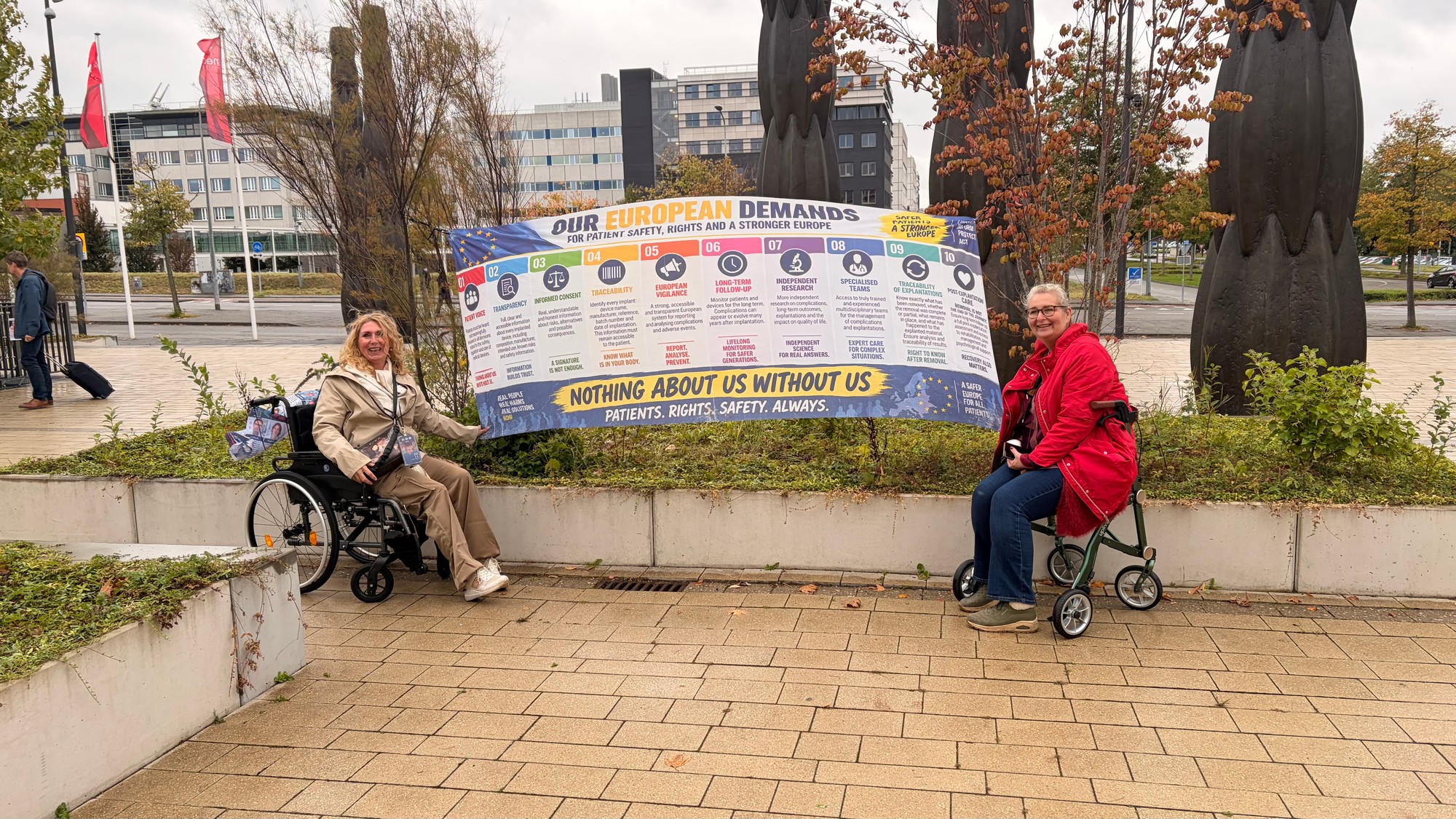
Two patients in front of the “Our European Demands” banner in Maastricht.
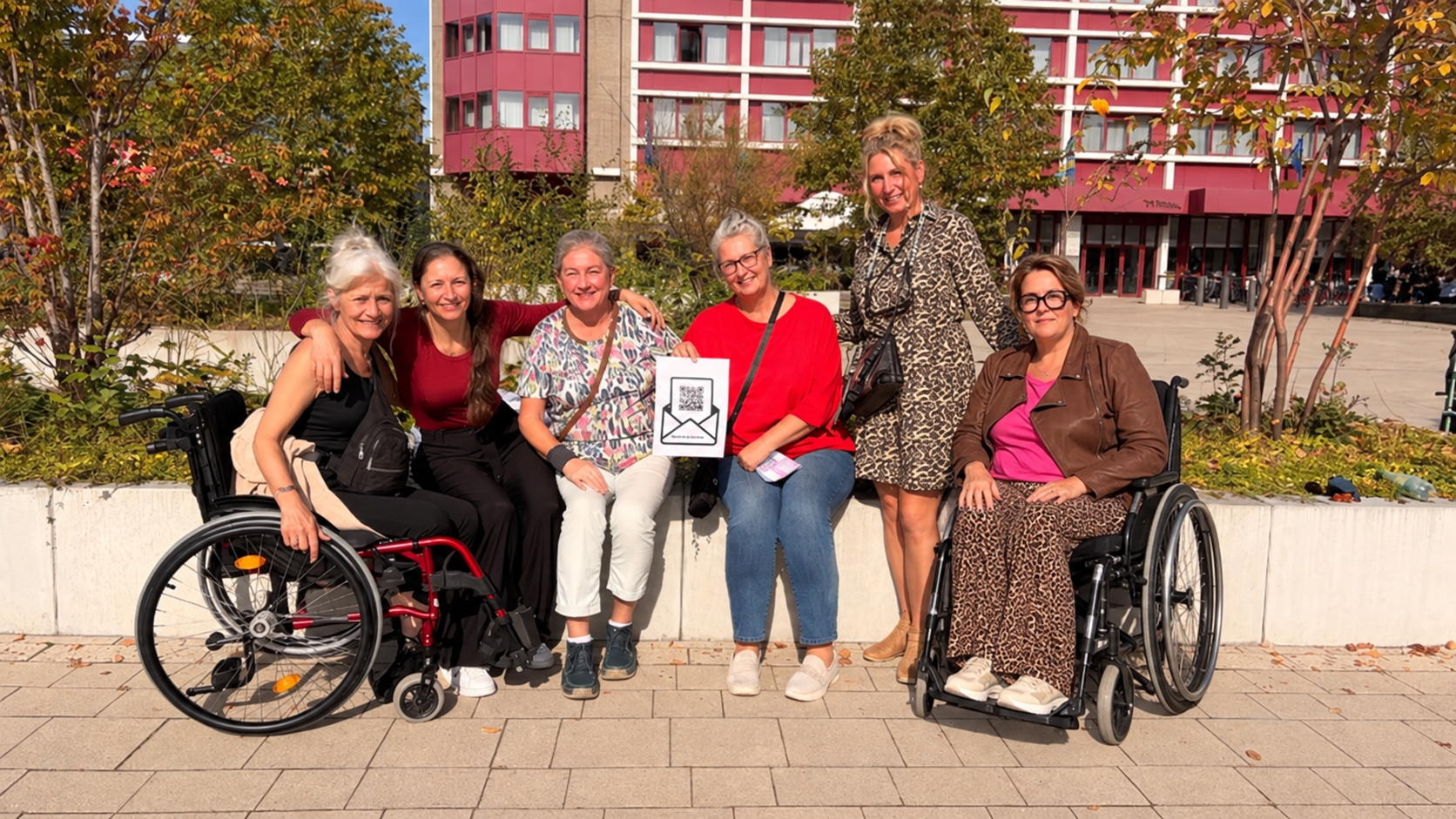
A delegation of patients and European organisations gathered in Maastricht.
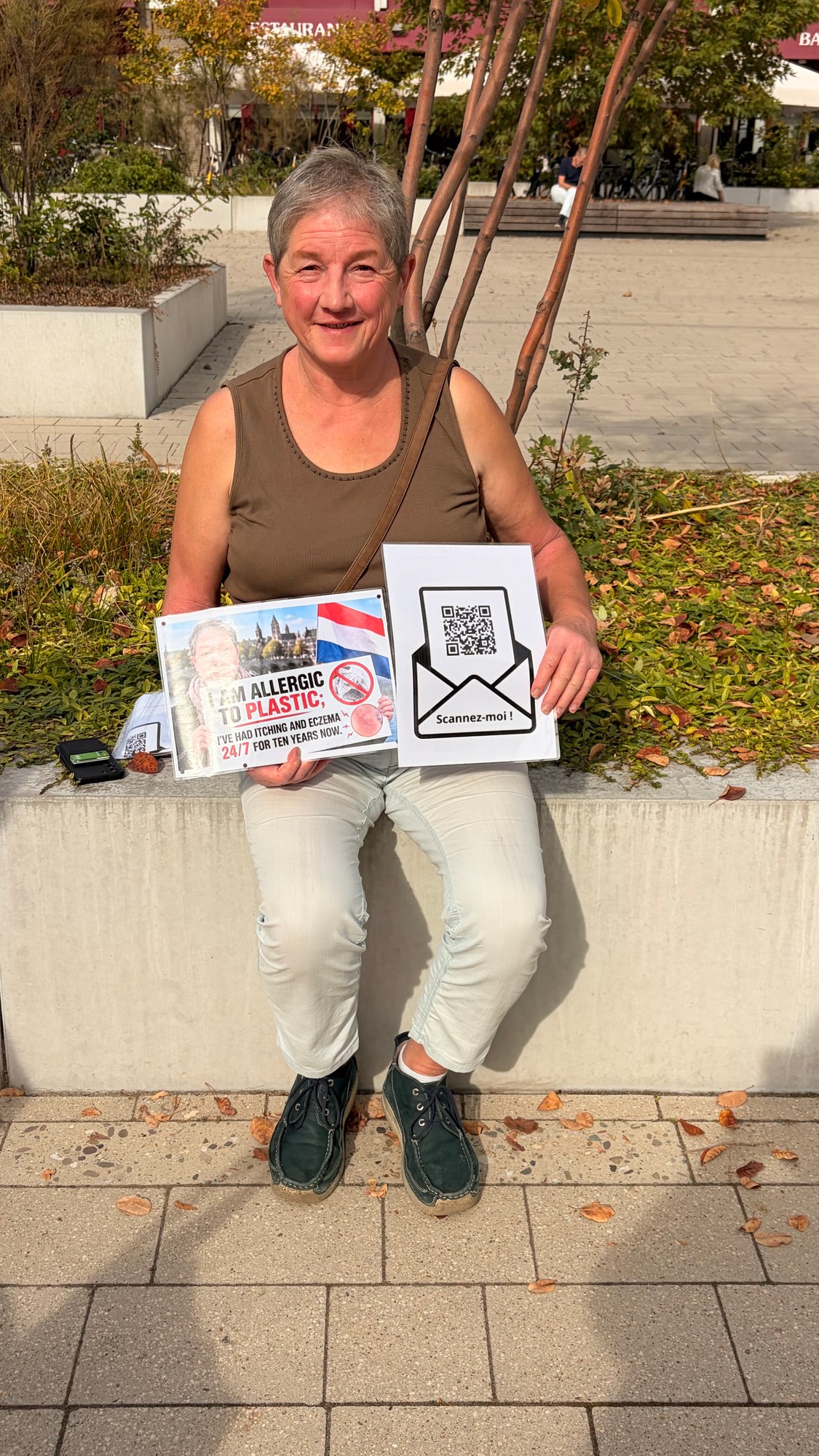
A patient holding a sign reading “I am allergic to plastic” outside the congress.
Patients and companions gathered on the congress square with flyers to scan.
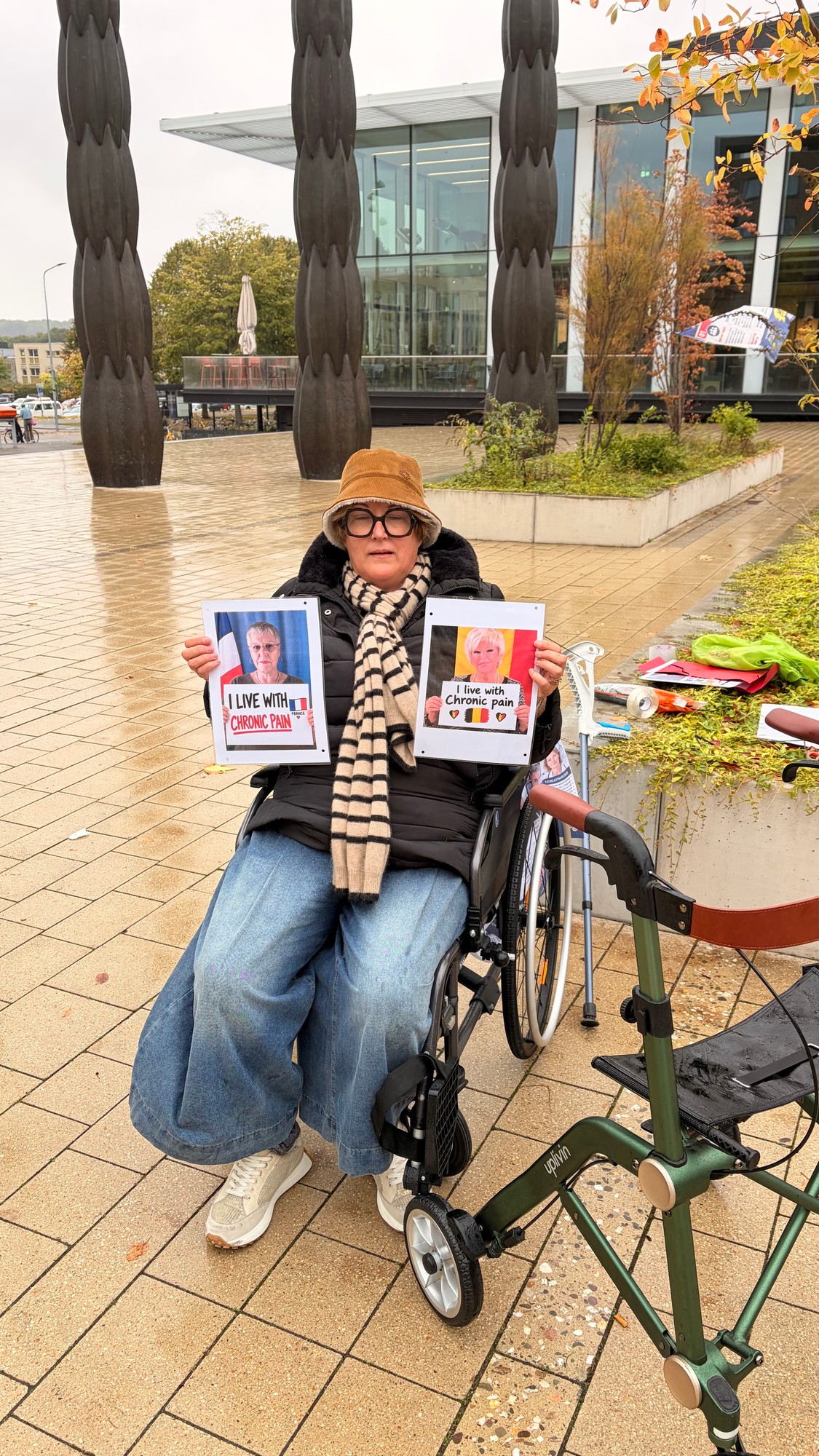
A patient in a wheelchair holding signs reading “I live with chronic pain”.
October 2026, Maastricht: a delegation of patients and European organisations.

Read the press coverage

10 — The coalition

A European voice for patients

Our goal is to bring together the voices of women concerned in several countries and to build a genuine European voice for patients carrying gynaecological, urological and pelvic floor medical devices.

Our health systems differ. Our languages differ. But the questions we ask are similar. We do not want each country to discover the same difficulties separately.

A problem affecting several European countries deserves a European response.

Countries engaged and in contact

  • 01France
  • 02Belgium
  • 03Netherlands
  • 04Spain
  • 05Portugal
  • 06Ireland
  • 07United Kingdom
  • +And other European countries

11 — Take action

We ask for your support

We ask French and European parliamentarians to help us bring this question to the competent European institutions. Patients must be involved in discussions that directly concern their safety.

  • 01Obtain an exchange with your team.
  • 02Share our documented dossier and testimonies with you.
  • 03Present the documents relating to the implants we have been able to identify.
  • 04Relay these questions to the competent health authorities.
  • 05Help bring about a parliamentary debate, in France and at European level.

Are the rights set out in European regulation genuinely guaranteed to every patient carrying an implantable medical device?

Write to the coalition

Patient, relative, organisation, healthcare professional, parliamentarian or journalist: your message matters. Describe your situation or your meeting request.

Prefer email? contact@europeanmeshcoalition.eu

The information you send is used only to reply to you and to document the coalition’s work. It is never published without your consent.